
Open a lift, tap to send a parcel, or refresh a live score, and something odd is true in every case: the outcome you are about to see was already fixed on a server a moment earlier. What you watch next is not a calculation happening in real time. It is a replay, dressed up in motion so the gap between “decided” and “shown” feels natural rather than instant.
That gap is not an accident of slow hardware. It is a deliberate design choice built into almost every interactive system, from elevator dispatch software to instant casino rounds. A crash-style round in the jetx app, for instance, has its multiplier ceiling generated by the server the instant the round starts, while the rising curve on screen is a scripted playback of a number that already exists.
Why the Screen Lags Behind the Server
Most networked systems separate two jobs that used to feel like one thing. A backend process runs the actual arithmetic – shuffling a deck, rolling a seed value, checking inventory – and stores the answer. A second, entirely separate layer then renders that answer for a human, pacing it out so the interface doesn’t feel like it’s dumping raw data on the user.
Airline check-in boards work the same way: gate assignments sit in a database minutes before the display flips. Elevator controllers pick the most efficient car, a routine described in most elevator dispatch algorithms, before the floor indicator even lights up outside your door. The pattern holds because raw computation is nearly instant, while human perception needs a beat of motion to register that anything happened at all.
Engineers call this separation the “compute-then-render” pipeline, and it shows up in places most people never think to question:
- A ride-hailing app assigns your driver the instant its algorithm ranks the nearest cars, yet the pin only glides across the map seconds later.
- A vending machine decides which snack drops before the mechanical arm even begins its short journey.
- A gate agent’s screen updates a boarding group internally minutes before the departure board catches up.
Between the decision and the display sits a small, deliberate performance – long enough to register, short enough not to annoy anyone waiting.
What That Split Second Does to the Brain
Behavioural researchers who study interface design keep landing on the same finding: a short, visible delay between action and result raises how satisfying the result feels, even when nothing about the outcome changed. A progress ring that fills in half a second reads as more trustworthy than an answer that appears instantly, because the brain associates visible effort with a fairer process.
Designers exploit this on purpose. A loading spinner that finishes too fast gets padded with extra milliseconds in usability testing, because testers reported the app “felt broken” otherwise. The same logic shapes how a countdown timer ticks before a flight price updates, or how a slot reel decelerates instead of simply stopping.
| System | When the result is generated | What the animation shows | Typical delay |
| Elevator dispatch | On button press, by the controller | Floor number counting toward you | 1-8 seconds |
| Package tracking scan | The moment a barcode is read | “Out for delivery” status update | Minutes to hours |
| Live sports score feed | At the final whistle or play | Scoreboard tick and replay graphic | 2-5 seconds |
| Instant casino round | When the round starts server-side | Rising curve or spinning reel | 3-10 seconds |
Common techniques used to stretch that gap productively include:
- A short sound cue that rises in pitch as the reveal approaches.
- A colour shift on the interface a beat before the number lands.
- A staggered reveal, showing partial information before the full result.
- A deliberate deceleration curve instead of an abrupt stop.
When the Delay Is Cosmetic
In certified random-number systems, the cosmetic case is the norm. The outcome is fixed the instant the request hits the server, verified against a seed value, and locked before a single pixel moves. Provably fair frameworks, used across many instant-win formats, let a player check afterward that the seed used for their round was not altered once the animation began – proof that the wait added drama, not uncertainty. Auditors who study these systems note that the maths itself takes microseconds; every extra second belongs entirely to the interface layer, not to the calculation.
When the Delay Still Matters
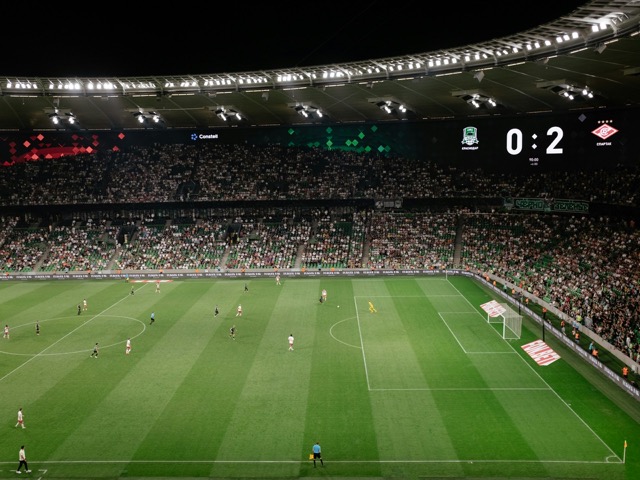
Not every pause is theatre. Network latency, queued transactions, or a live event still unfolding can mean the number on screen genuinely isn’t final yet – a football score before injury time ends, a stock price mid-trade, a parcel scan awaiting the next depot. Telling these two situations apart is a small but useful piece of digital literacy.
Recognising which kind of wait you’re looking at changes how you read the interface. A spinning icon after a certified draw is choreography. A spinning icon during a live, still-moving event is genuine uncertainty. Once you notice the difference, screens built on already-known results stop feeling mysterious – they’re just following a script written a fraction of a second before the curtain went up.